Cue Case Buying Guide
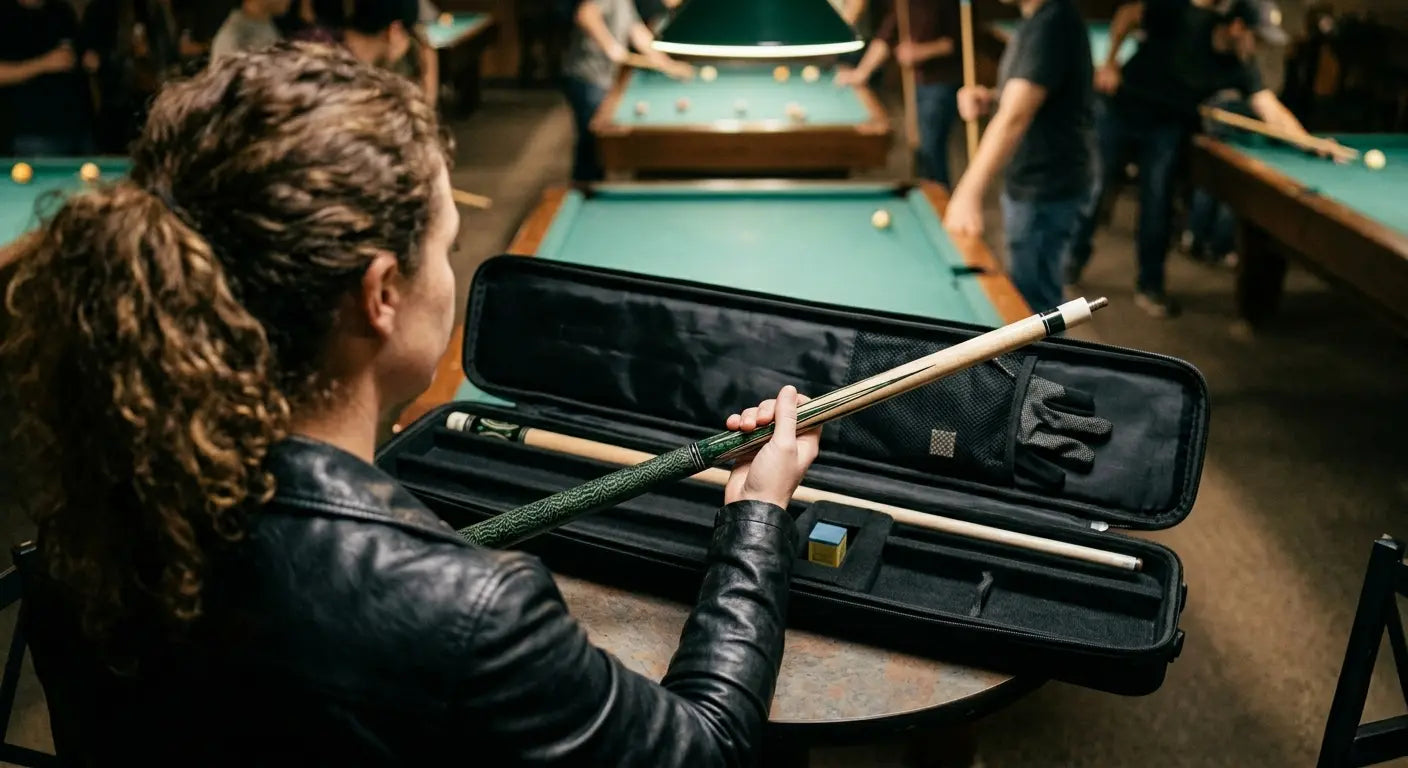
Investing in a high-quality pool cue is an investment in your game, but many players treat the case as an afterthought. Whether you are carrying a budget-friendly starter or a custom masterpiece, your case is the only thing standing between your gear and the hazards of travel, humidity, and accidental drops.
Hard, Soft, or Hybrid?
Hard Cases
Hard cases are the gold standard for maximum protection. Constructed with a rigid outer shell—often made of heavy-duty plastic, wood, or reinforced fiberglass—they utilize internal tubes or molded foam to keep cues stationary.
- Why choose it? If you travel frequently, play in crowded tournaments, or throw your gear in the trunk of a car, a hard case ensures that no amount of external pressure will warp or break your cues.
Soft Cases
Despite the name, modern soft cases are far from flimsy. They are typically made of high-denier nylon or padded leather.
- Why choose it? They are significantly lighter and more flexible. If you are a "commuter" player walking to a local hall or prefer a case that can squeeze into tight lockers, the weight savings and "squeeze factor" of a soft case are unbeatable.
Hybrid Cases
Hybrid cases offer the best of both worlds. They often feature a soft, luggage-style exterior with a reinforced internal skeleton. This gives you the lightweight feel and extra pocket space of a soft bag with the structural integrity of a hard tube case.
Size / Capacity
One of the biggest mistakes players make is buying a "1x1" case (1 butt, 1 shaft) because that is all they own today. As you progress, your needs will change. You might add a dedicated Break Cue, a Jump Cue, or a second Performance Shaft (like a carbon fiber shaft).
Pro-Tip: Buy at least a 2x2 or 2x4 case. It gives you room to grow without needing to buy a new bag next year.
Materials, Padding, and Pockets
- Exterior: Ballistic Nylon is tear-resistant and handles rough floors well, while Leatherette offers a classic, water-resistant look.
- Interior: Look for moisture-wicking linings and high-density foam. Better cases feature individual sleeves for every piece to prevent "chatter" marks caused by pieces clinking together.
- Storage: A good case is a mobile workstation. Ensure you have a long external pocket (at least 15 inches) for jump cue butts or extensions, and internal pockets for chalk, tips, and tools.
Carrying Options
- Standard Handles: Essential for short trips from the car to the table.
- Single Shoulder Straps: The most common; look for padded, non-slip versions. Many players wear these cross-body for better security.
- Backpack Straps: These are a lifesaver for 3x5 or 4x8 large capacity cases. They keep your hands free and prevent shoulder fatigue during long tournament weekends.