How to Set Up a Dartboard: Height, Lighting & More
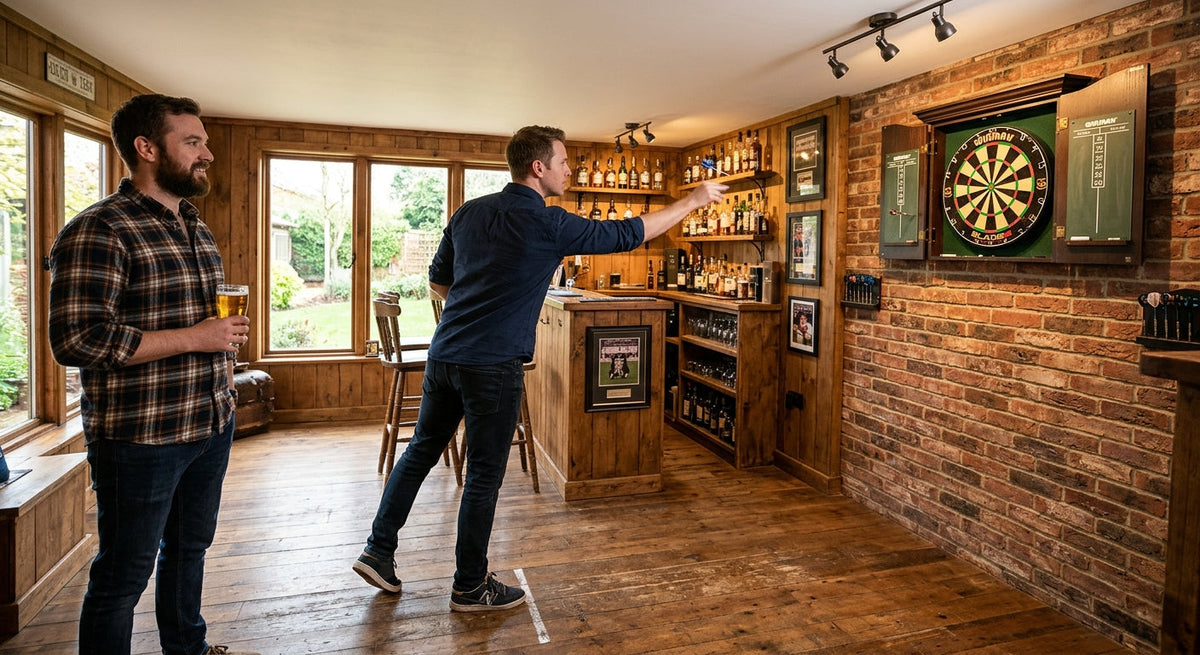
A good dartboard setup is about more than a board and a nail. Get the height, distance, lighting, and wall protection right and every throw feels better, your darts last longer, and your walls stay intact. Here's how to set up a dartboard and the room around it, what to look for in a quality board, and how to choose the right cabinet. You can browse everything mentioned below in our Dart Boards and Dart Supplies collection.
Step 1: Choose Steel Tip or Soft Tip
This decision shapes everything else. Steel tip is the traditional game played with a bristle board and metal-pointed darts. Soft tip uses plastic-tipped darts on an electronic board that keeps score for you, which makes it a popular choice for game rooms and families. Steel-tip boards are the standard for serious practice and league play; electronic boards are great for casual play and kids. Don't mix them: steel darts will damage an electronic board's segments.
Step 2: Get the Measurements Right
Regulation dimensions are the same everywhere, so you'll be practicing the way tournaments are played:
- Height: the center of the bullseye is 5 ft 8 in (173 cm) from the floor.
- Throw distance: 7 ft 9¼ in (237 cm) measured horizontally from the face of the board to the throw line (the "oche") for steel tip. Soft-tip boards are commonly played from 8 ft.
- Diagonal check: the distance from the bullseye to the toe line along the floor angle should be about 9 ft 7⅜ in.
- Board orientation: the 20 goes at the top.
Measure the height from the floor to the bullseye, not the bottom of the board. Mark the throw line with a dart mat or a strip of tape so it stays consistent.
Step 3: Plan the Room
Space
Plan on at least 10 feet of clear length, with several feet of width so the thrower has room to stand and people can walk behind without crossing the throwing lane. Keep the line of fire clear of doors, windows, and anywhere people walk.
Lighting
Good lighting is the most overlooked upgrade. Light the face of the board evenly with no glare and no shadow from your own body or arm. A ceiling fixture or a dedicated board light mounted above works best; avoid a single light behind you, which casts your shadow onto the board.
Floor and wall protection
Misses happen. A hard floor can chip darts and the tips, so a dart mat or rubber floor protector is worth having. Behind and around the board, a surround or a backboard protects the wall from stray darts. For a clean look and real protection, a cabinet does both jobs at once.
Comfort and atmosphere
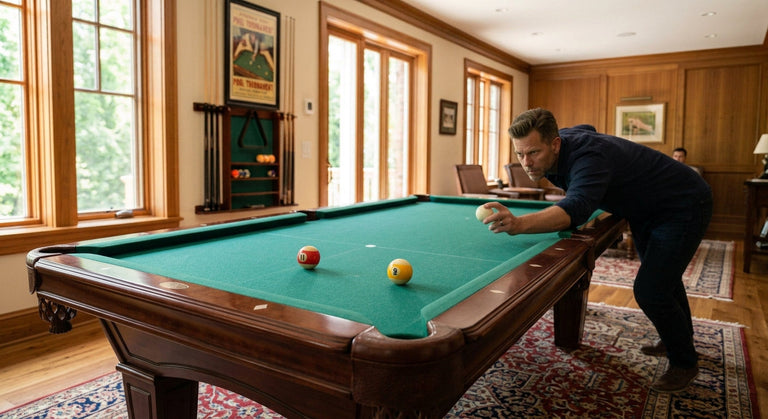
Leave space for a stool or bar table, a place to set drinks, and a scoreboard within easy view. If your game room already has a pool table or bar, keep the dart lane away from cue swings and walking paths.
What to Look for in a Good Dartboard
For steel-tip play, quality shows in the board's construction.
- Sisal fiber (bristle) construction: tightly compressed sisal fibers let a dart point slip between the fibers and the board "self-heals" as they close back up. Cheaper boards made of cork or compressed paper wear out faster.
- Thin wiring: thinner, tapered wire cuts down on bounce-outs so more darts stick.
- Staple-free bullseye and segments: staple-free construction reduces the chance of darts bouncing off hardware.
- Rotating number ring: being able to rotate the board regularly spreads wear across all the segments, so it lasts much longer.
- Standard 18-inch diameter: a regulation-size board keeps your practice honest.
If you're getting started, a dependable tournament-style bristle board such as the Alien Professional Tournament Dartboard is an easy way to get regulation play at home. If you'd rather not keep score yourself, browse the electronic boards in the dart collection.
Choosing a Dartboard Cabinet
A cabinet protects your wall, stores your darts and scoring supplies, and turns a dartboard into furniture. When the doors close, the board disappears. Here's what to consider:
- Wall mount or standing: wall-mounted cabinets save floor space and hang at the correct height. Freestanding models don't need to be anchored to a wall. For example, the Knoxville Wall Mount Dartboard Cabinet and its standup version offer both.
- Finish and style: match your room. Dark espresso finishes like the American Heritage Strafford suit a traditional game room, while the Brunswick Dartboard Cabinet pairs naturally with a Brunswick pool table.
- Included board and accessories: a cabinet set bundles the board, darts, and often a scoring surface, which is a good value for a first setup. The Shot Renegade Cabinet Set is a simple starter option.
- Fan and brand cabinets: team and brand sets such as the NFL Fan's Choice set, the MLB Fan's Choice set, and the Jack Daniels set make a great man cave or bar centerpiece.
- Premium furniture-grade options: for a showpiece, the American Heritage Vienna and Windsor cabinets are built to look like real furniture, while the Turnberry, Gateway, and Athos sit in a middle range.
Before you buy, check the cabinet's interior size against your board, and confirm the cabinet places the bullseye at the regulation height when mounted.
Other Things to Consider
- Noise: darts hitting a board are louder than you'd expect. Mount on a solid wall and avoid an area right above or beside a bedroom.
- Safety: keep children and pets clear of the lane, and don't mount a board near anything breakable.
- Dart weight and grip: most players are comfortable between 22 and 26 grams. Try a few weights before committing to a set.
- Maintenance: rotate your board regularly, keep it dry, and replace worn tips so they don't damage the fibers.
Ready to Set Up Your Dart Zone?
With the right height, distance, lighting, and a protective cabinet, you can have a regulation setup in an afternoon. Explore our full selection of boards, cabinets, and supplies at Ozone Billiards' Dart Boards and Dart Supplies collection. Building a full game room? See our guide to building a game room around a pool table and our home bar buying guide.