How to Play 9-Ball: Rules, Strategy, and Gear to Get Started
If you've already read our guide on how to play 8-ball, you know the basics of calling shots and running a rack. Now it's time for the game most serious players and every major pro tour actually compete in: 9-ball. It's faster, it's less forgiving, and it rewards precision over power. Here's what you need to know to start playing.
The basic idea
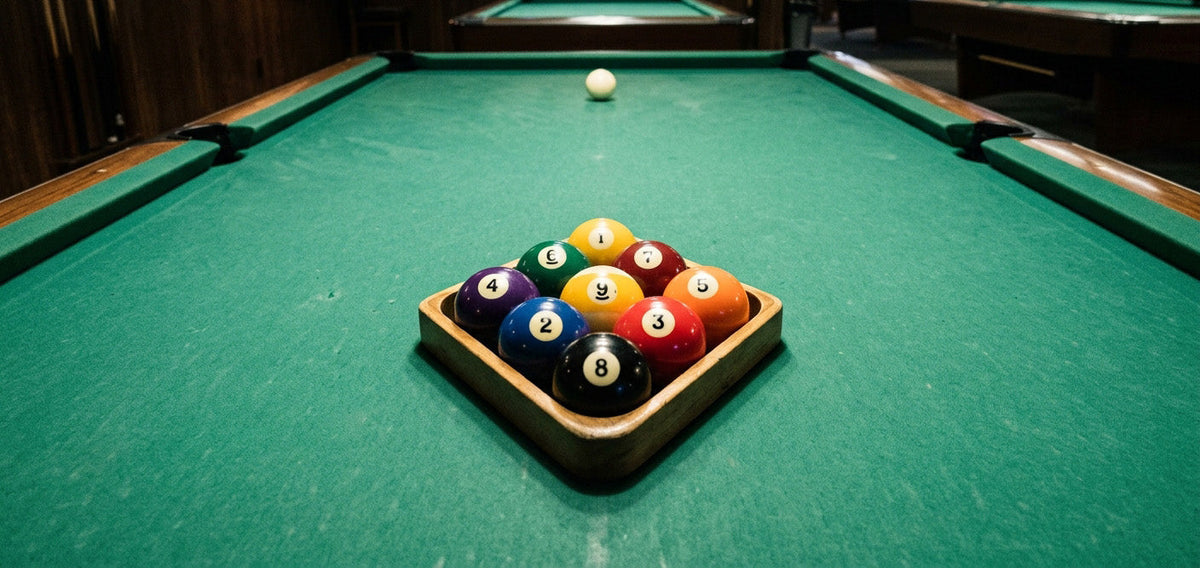
9-ball uses nine numbered balls (1 through 9) plus the cue ball, racked in a diamond shape instead of the triangle you'd use for 8-ball. The 1-ball goes at the front of the diamond, the 9-ball sits in the center, and the rest are placed randomly. The goal is simple to state and hard to execute: legally pocket the 9-ball before your opponent does.
What makes 9-ball different from 8-ball is the rotation rule. On every shot, you must contact the lowest numbered ball on the table first. You don't have to pocket that ball, and you don't have to call your shot the way you do in 8-ball. If a ball goes in as a legal result of hitting the lowest numbered ball first, even the 9-ball on a combo, it counts. That's part of why 9-ball has a reputation for being exciting to watch: a lucky combination can end the game in a single shot.
How a rack plays out
- Balls are racked 1 through 9 in a diamond, with the 1-ball at the head spot and the 9-ball in the middle
- The breaker must either pocket a ball or drive at least four balls to the rail, or it's a foul
- Every shot after the break must contact the lowest numbered ball on the table first, even if you're aiming to pocket a different ball
- If you pocket a ball illegally or foul, your opponent gets ball in hand, meaning they can place the cue ball anywhere on the table
- The game ends the moment the 9-ball is legally pocketed, by anyone, at any point
That last rule is the one new players forget. Even on the break, if the 9-ball happens to drop, the game is over right then. It's one of the reasons 9-ball breaks get so much attention from spectators and why a good breaking cue matters more in this game than in most others.
Fouls to watch out for
Beyond hitting the wrong ball first, a few other fouls come up often for beginners. Scratching the cue ball into a pocket is a foul and hands your opponent ball in hand. So is failing to make contact with any ball at all, and so is knocking a ball off the table entirely. None of these end your game, but they hand your opponent a big advantage, so it pays to slow down and think through your shot before you take it, especially early on when your stroke is still developing.
Strategy for beginners
New 9-ball players tend to focus entirely on pocketing balls and forget about position. Because you have to hit balls in order, thinking one or two shots ahead matters just as much as making the shot in front of you. Before you shoot, ask where the cue ball will end up and whether you'll have a clean look at the next lowest ball.
Safety play is also a much bigger part of 9-ball than most beginners expect. If you don't have a good shot, professional players will often intentionally leave the cue ball in a spot that makes the next shot difficult for their opponent, rather than trying a low-percentage pocket attempt. It's not the most exciting part of the game to learn, but it's often the difference between winning and losing once you're playing people at your own skill level.
Gear to get started
You don't need anything special to start playing 9-ball since it uses a standard cue ball and object balls, just a different rack shape. A couple of things are worth having on hand, though. A proper diamond-shaped rack will make your practice sessions match what you'll see in a real match or league night.
If you're ready to invest in a cue built with rotation games in mind, the Cuetec Cynergy Matchroom Nine Ball Series was designed in partnership with Matchroom, the organization behind many of the biggest professional 9-ball tours. It's a carbon fiber cue built for the kind of precision this game demands, and it comes in a few different colorways if you want something that stands out on the rack.
For a fun bit of extra motivation, we also carry a 9-ball signed by Fedor Gorst, the reigning world 9-ball champion. It won't improve your game, but it's a nice reminder of what's possible if you stick with it.
Practice makes the difference
9-ball rewards repetition more than most cue sports. The rotation rule forces you to think through the whole table on every shot, and that skill only comes with time at the table. Start by racking a few balls at a time and working on running them in order before you jump into a full nine-ball rack against another player. It'll feel slow at first, but it builds the habit of thinking ahead that separates casual players from the ones who can actually run a table.