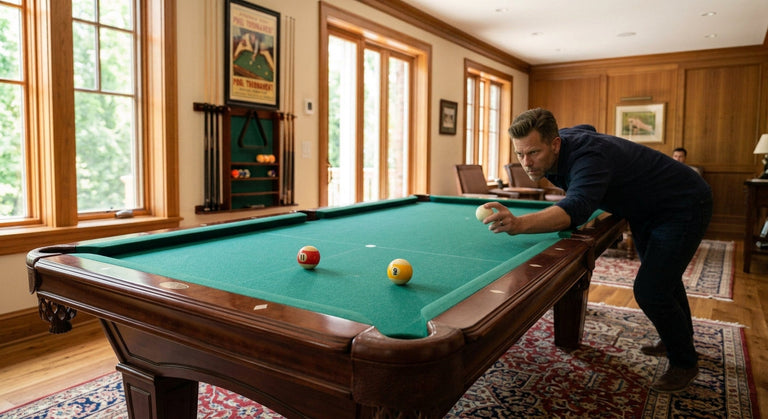
How To Play 8-Ball
Whether you are looking to start a new hobby or just want to hold your own at the local pool hall, 8-ball is the most popular way to get into the world of billiards. It is a game of skill, physics, and strategy that is easy to learn but takes a lifetime to master
This guide covers everything a beginner needs to know to get started, from setting up the table to sinking the final black ball.
The Setup: Racking the Balls
The game begins with 15 numbered balls and one white cue ball. The numbered balls are divided into two groups: "solids" (1–7) and "stripes" (9–15). We'll get to the 8-ball in a minute.
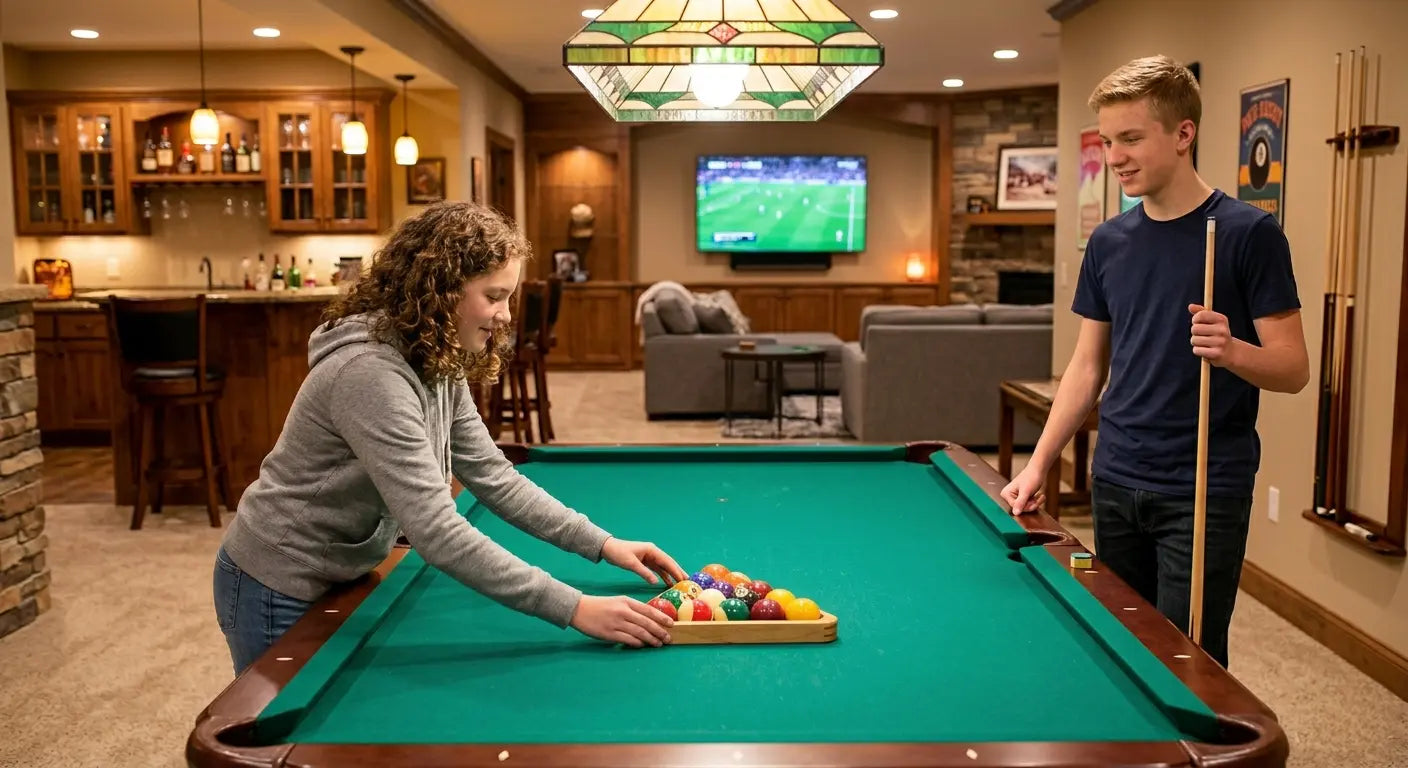
To set up the game, you gather the balls using the ball rack placing the 8-ball in the center of the triangle. Place a solid ball in one rear corner and a striped ball in the other rear corner. The rest of the balls can be placed randomly. Now position the ball rack so the one side of the triangle is parallel with the end of the table and the ball at the top of the triangle on breaking dot. If your table doesn't have that dot, just ensure the rack is about 12" from the end of the table.
Playing a Game
The "break" is the first shot of the game. One person breaks by shooting the white cue-ball into the racked balls. To have a legal break, the breaker must either pocket a ball or drive at least four numbered balls to the rails (sides of the table) so don't be afraid to really whack it. If you're looking for a consistent break, having a quality set of pool balls is key.
The table is considered "open" immediately after the break, even if balls were pocketed. The first player to legally pocket a ball after the break "claims" that group. For example, if you pocket the 3-ball, you are now "solids" for the rest of the game. Your opponent will be "stripes."
On every shot, the cue ball must strike one of your own balls first. After that contact, at least one ball must either be pocketed or touch a rail although you can let this last point slide a little while you're learning.
In many official rules, you must "call" which ball you intend to sink and into which pocket. If the ball goes into a different pocket, it stays down, but your turn ends. Choosing when to enforce this rule can be great equalizer for newer players. When both players are beginners, you can allow all pocketed balls to be legal and if only one player is more experienced, you can force them to play call-shot while still allowing the beginner at the table a lucky shot here and there.
If you scratch (sink the cue ball), hit your opponent’s ball first, or fail to hit a rail after contact, it is a foul. The opponent then gets "ball in hand," meaning they can place the cue ball anywhere on the table for their next shot.
Once you have pocketed all seven of your balls (solids or stripes), you can attempt to sink the 8-ball. You must call the pocket for the 8-ball. If you sink it in the designated pocket legally, you win! You lose the game if you sink the 8-ball before clearing your group, if you scratch while shooting at the 8-ball, or if the 8-ball jumps off the table.
Beginner Strategies & Tips
- Focus on the Leave: Don’t just think about the ball you are hitting. Think about where the cue ball will stop. You want to "leave" yourself an easy angle for your next shot.
- Keep It Simple: Beginners often try to use too much "English" (spin). For the first few months, focus on hitting the cue ball in the dead center. Consistency is more important than flair.
- Chalk Every Time: Using pool cue chalk before every shot prevents "miscues," where the tip of the cue slides off the ball prematurely.
Essential Gear for Beginners
You don't need a professional setup to play well, but having your own equipment allows you to develop a consistent feel for the game, especially when playing outside the home at bars, pool halls, or even a friends house.
- Personal Cue: Using a different "house cue" every time you play makes it hard to learn. A budget-friendly pool cue from a reliable brand like Lucky, Action or Players provides the consistency you need to improve.
- Case: If you're taking your game on the road, keep all your essentials organized and protect your cue with quality cue case. Basic cases can be found for under $20 and you can get into good case with solid protection and extra pockets for under $100.
- Glove: If the humidity is high or your hands get sweaty, a billiard glove helps the cue slide smoothly through your fingers.
- Tip Tool: Keeping the leather tip of your cue rounded and scuffed helps it hold chalk better, giving you more control over your shots. Check out these tip tools for some great options
By understanding these fundamentals and practicing your aim, you’ll find that 8-ball is a rewarding game that combines mental focus with physical precision. See you at the table!