Cue Tips and Chalk 101: What Actually Matters (and When to Replace Them)
Most new players blame a bad shot on their stroke. Sometimes the real problem is smaller than that: a worn tip that's gone hard and shiny, or chalk that's more dust than grip. Your cue tip and your chalk are the only two things that actually touch the cue ball, so when either one is past its prime, every shot gets a little less predictable. The good news is that both are cheap, easy to understand once you know what to look for, and simple to fix.
Why Chalk Matters More Than People Think
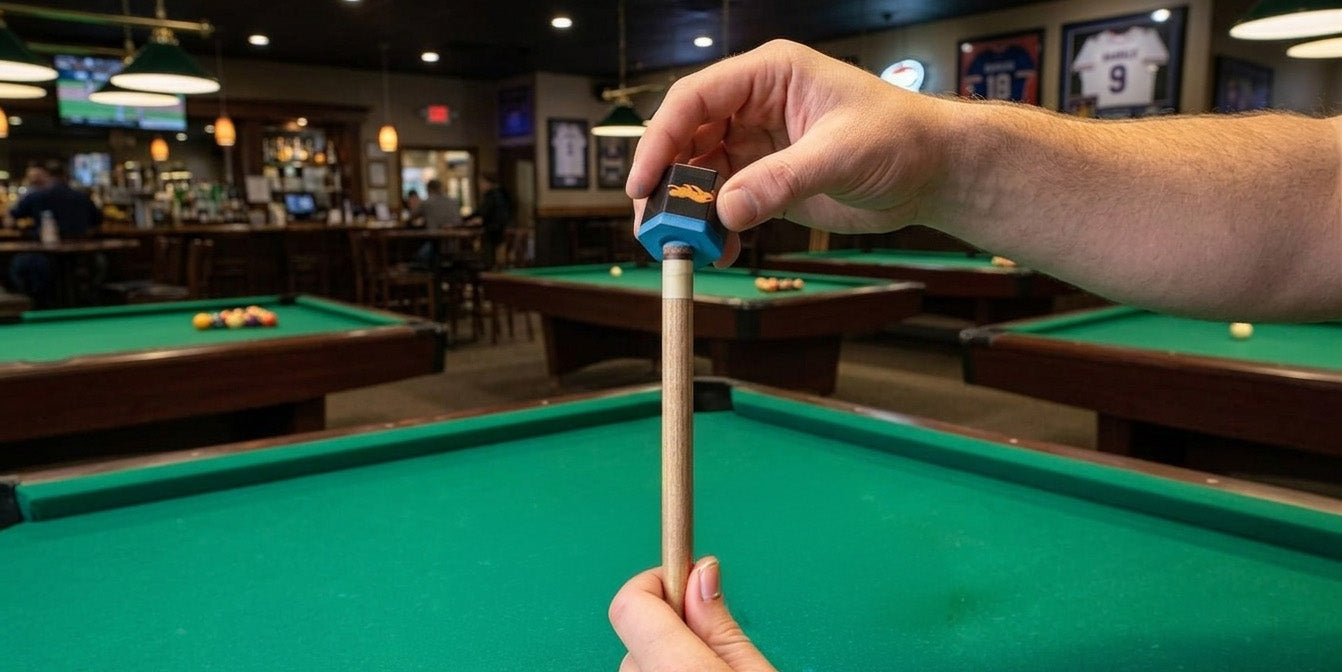
Chalk isn't there to make your tip blue. It fills in the microscopic texture on the tip's surface so it grips the cue ball instead of sliding across it. Skip it, or apply it wrong, and you'll eventually get a miscue, that awful scraping sound where your tip slips off the ball at the worst possible moment.
Not all chalk behaves the same way, and this is where a lot of players get stuck buying whatever's sitting by the register. A few differences worth knowing:
- Classic chalk like Master Pool Cue Chalk has been the standard at pool halls for decades. It's inexpensive, works fine for most players, and comes in a dozen-cube box so you're never without it.
- High-grip formulas such as Predator 1080 Pure Blue Chalk are built to hold onto the tip longer between applications, which matters if you play a lot of draw or side spin.
- Premium press chalk like Taom V10 Chalk uses a denser, longer-lasting formula that a lot of competitive players have switched to. It costs more per piece, but a single cube lasts far longer than traditional chalk.
Whichever you pick, apply it lightly with a twisting motion rather than grinding it on. Over-chalking just cakes powder onto the ball and table, and it doesn't actually improve your grip.
Signs Your Tip Needs Attention
A cue tip is a small piece of leather doing a lot of work, and it wears out well before most players notice. Here's what to check every few months:
- Mushrooming: if the tip has flattened out and now overhangs the edge of the ferrule, it's lost its shape and won't hold chalk evenly.
- Hard or glazed surface: a tip that feels smooth and shiny instead of slightly textured won't grip chalk the way it should.
- Frequent miscues: if you're suddenly miscuing more than usual and it's not your stroke, check the tip before you check your technique.
- Visible wear or peeling: cracks, flat spots, or separation from the ferrule mean it's time for a replacement, not a touch-up.
When it's time to replace rather than reshape, a laminated leather tip like the Kamui Black Laminated Leather Pool Cue Tip is a popular upgrade. Laminated tips are built from layered leather discs, which makes them more consistent and longer-lasting than a single-piece tip, and they hold their shape noticeably longer between maintenance sessions.
The Tools That Make Maintenance Easy
You don't need a full workshop to keep your tip in shape. A couple of inexpensive tools cover almost everything:
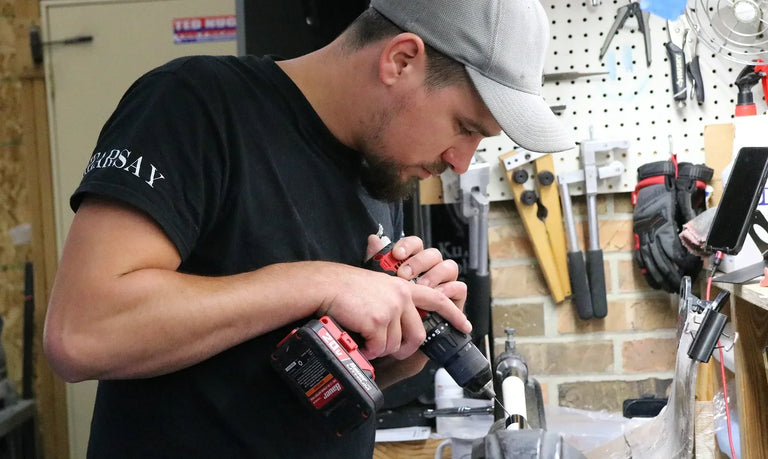
- A combination tool like the Last 4 Ever Tip Tool handles shaping, scuffing, and trimming in one piece, so you can round out a mushroomed tip or rough up a glazed surface in under a minute.
- If a tip is lifting at the edge or you're installing a new one at home, Tiger Insta-Cure Tip Glue is a fast-curing adhesive made specifically for this job. Regular household glue can soften with heat and friction; cue tip glue won't.
Neither of these requires any special skill. Shaping and scuffing take a few minutes once you've done it once or twice, and most players find it satisfying to maintain their own equipment instead of guessing why their game feels off.
A Simple Care Routine
- Chalk before every shot, applying lightly with a twist rather than pressing hard.
- Check the tip's shape and texture every few weeks if you play regularly.
- Scuff a glazed tip with a tool before assuming you need a full replacement.
- Replace the tip once it's mushroomed, cracked, or worn thin, rather than waiting for it to fail mid-game.
- Keep a spare tip and glue on hand if you play often enough that a mid-season replacement is likely.
None of this takes long, and it's a lot cheaper than a new cue. If you want to see the full range of tips, chalk, and tools in one place, the Pool Cue Accessories collection has everything mentioned here plus the rest of what most players keep in their case. Small details, but they're the two things that touch the ball on every single shot, so they're worth getting right.